
Fashion for Good has launched the first open-source blueprint for near-net-zero textile manufacturing, developed under its Future Forward Factory project. The blueprint aims to help Tier 2 textile manufacturers in India cut carbon emissions by up to 93% through practical and financially viable interventions.
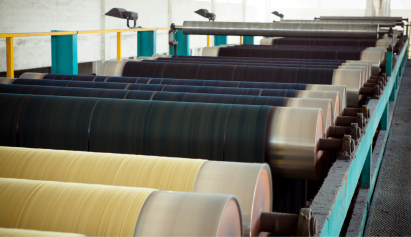
Photo by danishkhan via Canva
A Response to High-Emission Wet Processing
Textile dyeing, treatment, and finishing—classified as Tier 2 processes—are among the fashion industry’s largest sources of pollution and emissions. These stages require significant water, chemicals, and energy, yet manufacturers often struggle with high upgrade costs, fragmented solutions, and the absence of a unified strategy. According to Fashion for Good, this blueprint fills that gap by offering a holistic playbook for decarbonisation.
What the Blueprint Offers
Designed specifically for factories producing cotton knits and wovens, the blueprint combines energy interventions, advanced technologies, and process innovations. It outlines five tailored decarbonisation pathways, each supported with financial analysis covering payback periods, internal rate of return, and net present value.
If fully implemented, the proposed upgrades can deliver:
- 93% reduction in carbon emissions
- 33% reduction in water consumption
- 41% reduction in electricity usage
The guide also includes a Policy Landscape Overview mapping relevant government incentives, along with a navigation section to help manufacturers identify the right pathway for their operations.
Project Partners
The initiative is supported by Laudes Foundation, H&M Foundation, Apparel Impact Institute (Aii), IDH, and consultancy partners including Bluwin, Wazir Advisors, Grant Thornton Bharat, and Sattva Consulting. Arvind Mills serves as the anchor partner in India.
Katrin Ley, Managing Director of Fashion for Good, stated that the blueprint provides “concrete guidance and validated financial data,” addressing one of the sector’s biggest obstacles—the lack of a clear, implementable decarbonisation plan.
Next Steps and Pilot Facility
Fashion for Good plans to work with selected manufacturers in India, offering technical support and financial insight to help factories adopt the recommended upgrades. Arvind Mills highlighted that the blueprint demonstrates how a holistic understanding of decarbonisation can unlock long-term operational efficiencies.
Fashion for Good and Arvind are exploring the creation of the first Future Forward Factory, a near-net-zero production facility that will act as a functioning proof of concept. The organisation also plans to develop similar blueprints tailored to South Asia and Latin America.
Industry Engagement
A webinar for Indian manufacturers and stakeholders will be held on 8 December 2025 on the Fashion for Good LinkedIn page, offering a walkthrough of the blueprint and guidance for implementation. The blueprint is available for download on the Fashion for Good website.