
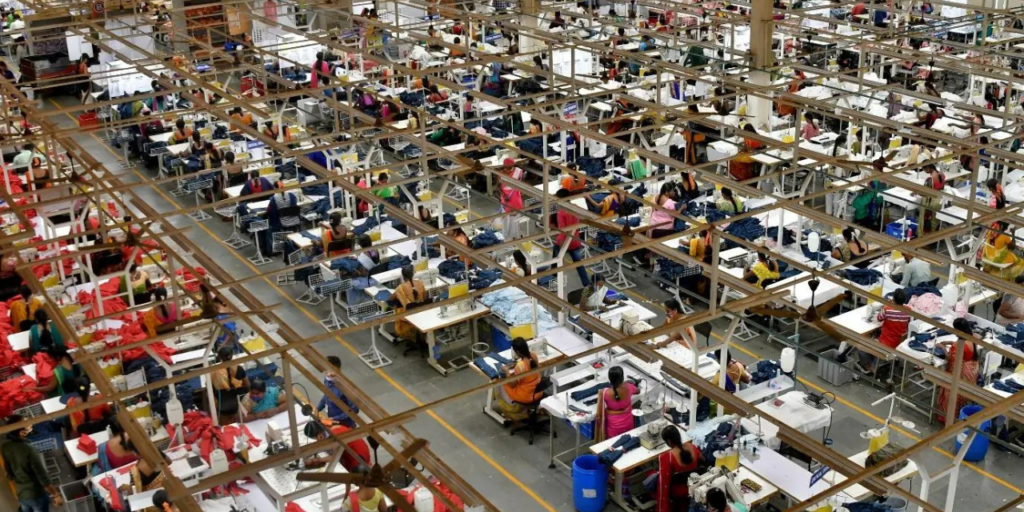
The Ministry of Textiles closed 2025 with a sweeping set of achievements that reshaped India’s textile ecosystem—combining bold policy reforms, infrastructure expansion, digital transformation and farmer-centric interventions. The Year End Review reflects a sector driven by the “farm to foreign” vision, strengthening domestic manufacturing while boosting global competitiveness and livelihoods across cotton fields, looms, factories and export markets.
Reforms That Reset the Sector
Throughout the year, the Ministry rolled out far-reaching regulatory and structural reforms to ease compliance and reduce costs. Key among them was the rescinding of the Quality Control Order (QCO) on Viscose Staple Fibre (VSF) with effect from November 18, 2025, alongside the withdrawal of QCOs on MMF polyester segments and the deferment of QCO 2023 for cotton bales until August 2026. The implementation of QCO on textile machinery was also extended to September 1, 2026.
Relief to the value chain came through customs duty exemption on raw cotton imports between August and December 2025, while export-oriented units benefited from the extension of RoDTEP to EOUs, SEZs and Advance Authorisation holders, and RoSCTL for garments and made-ups until March 31, 2026.
Major GST rationalisation approved by the 56th GST Council brought garments and made-ups under 5% GST up to ₹2,500 per piece, reduced MMF fibres from 18% to 5% and MMF yarns from 12% to 5%, and cut rates to 5% for carpets, handicrafts, handlooms and sewing machines—correcting inverted duty structures and easing working capital stress.
The Production Linked Incentive (PLI) Scheme for textiles was revised to remove hardships, with expansion of eligible products, relaxation from setting up new companies, lower minimum investment thresholds and reduced incremental turnover criteria from 25% to 10%.
At the infrastructure front, approval and rollout of seven PM MITRA Parks with an outlay of ₹4,445 crore marked a milestone. Land utilisation frameworks were finalised, 100% land was acquired and handed over to SPVs, and environment clearances were secured for all parks.
Further, decriminalisation of provisions under the Jan Vishwas Bill 2025 in the Central Silk Board Act, Textiles Committee Act and Handloom Reservation Act reflected the government’s push for trust-based governance.
Performance Anchored in Delivery
The year saw robust execution across fibres and segments. Cotton procurement under MSP reached a record 525 lakh quintals (100 lakh bales), with ₹37,450 crore paid directly to farmers. In jute, 4.16 lakh quintals were procured at MSP, benefiting 83,000 farmers, while certified seeds were distributed to 72,000 farmers across 23,000 hectares.
Silk production continued to rise, supported by 38 modernisation projects in the North-East. In wool, six Common Facility Centres were sanctioned, along with 211 shearing machines, a ₹4 crore revolving fund, 400 tents and 300 predator-proof corrals.
PM MITRA Parks moved into action mode with the Prime Minister laying the foundation stone for the Dhar park in Madhya Pradesh on September 17, 2025. Infrastructure works worth ₹2,591 crore commenced in all seven states, internal park projects of ₹7,024 crore were approved for four states, and ₹160 crore was released. Investment MoUs exceeding ₹27,434 crore were signed, while commercial production began in Telangana with ₹4,000 crore investment and employment for 25,000 people.
Under the PLI Scheme, 40 units reported investments, 22 achieved threshold levels, and 30 commenced production—signalling tangible outcomes.
Skilling, Inclusion and Institutions
The SAMARTH scheme continued to transform employability, skilling 5.41 lakh persons so far, of which 88% are women, with 75% placement through new partners. The approval of a new NIFT campus at Raipur, alongside new courses across existing campuses, strengthened fashion education.
India Handmade initiatives delivered scale: 307 handloom and 462 handicraft marketing events, 1,225 CDAPs, 746 design programmes and 517 skill programmes were organised. Raw material supply reached 495.33 lakh kg of yarn to 5.38 lakh weavers. Credit access expanded with 11,544 MUDRA loans, while 2.35 lakh new social security enrolments were recorded. Additionally, 1.30 lakh artisans received Pehchan cards and 67 Handicraft Producer Companies were approved.
Export Momentum and Global Platforms
Textiles and apparel exports touched USD 37.8 billion in 2024–25, posting 5% growth and delivering a trade surplus of USD 28.2 billion. Bharat Tex 2025 emerged as a defining global platform, hosting over 5,000 exhibitors and welcoming more than 1,20,000 visitors from 120+ countries.
Infrastructure expansion continued with 59 textile parks sanctioned under SITP, of which 22 were completed.
Transforming for the Long Term
Looking ahead, the Ministry launched a five-year Mission for Cotton Productivity to boost yields, promote ELS varieties and embed sustainability under the 5F vision. The Kasturi Cotton Bharat programme anchored on certification, traceability and branding aims to position Indian cotton globally, supported by blockchain-based QR-coded bales (BITS) and the CotBiz platform.
The National Technical Textiles Mission was extended to March 2026, covering 168 R&D projects worth ₹520 crore, 24 startups, support to 45 academic institutes with ₹204 crore and eight QCOs on 68 items. Notably, 56.75% of the 74 selected PLI applications belong to technical textiles.
NIFT expanded its footprint to 19 campuses with Varanasi and Begusarai centres, new UG programmes, international placements and the launch of the NIFT Fashion Journal. The handloom sector added 12 Producer Companies, six Craft Handloom Villages and four new GI registrations, while the ShilpiDidi campaign empowered women entrepreneurs. The Vision 2030 target of USD 100 billion textile exports now anchors future growth.
Informing Through Digital Reach
Digitisation defined governance in 2025. The KapasKisan app enabled cotton farmers to self-register and book slots. Sericulture farmers received real-time cocoon and raw silk prices via SMS, while web and mobile platforms streamlined silk seed and chawki centre inspections.
Weavers accessed E-pehchan online ID cards, and artisans benefited from IndiaHandmade.com and Bharatiya Vastra Evam Shilpa Kosh portals. DNA-based Pashmina testing facilities were set up at Leh and Srinagar. The Jute Crop Information System, developed with ISRO, enabled scientific crop assessment, supported by satellite monitoring and mobile procurement. RoSCTL processes were fully digitised, 520 exporting districts were mapped, and NIFT released the second VisioNxt Trend Book along with India-specific size charts under INDIA size.