
Market Summary:
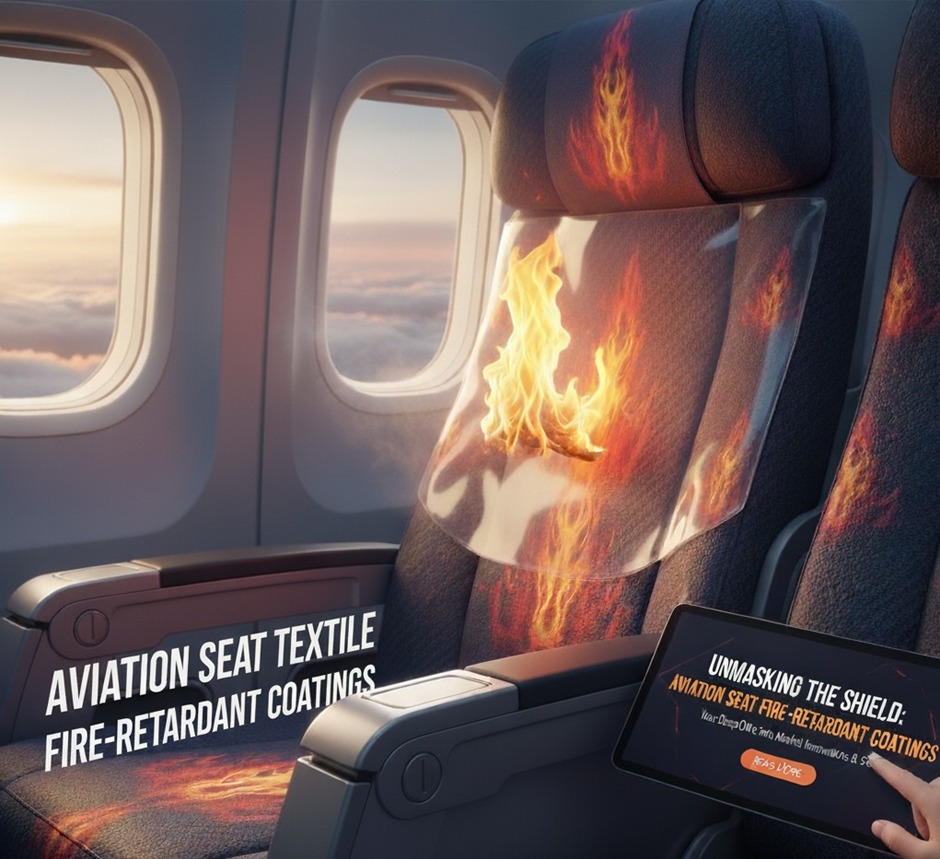
According to Research intelo, the Global Aviation Seat Textile Fire-Retardant Coatings market size was valued at $485 million in 2024 and is projected to reach $820 million by 2033, expanding at a CAGR of 5.9% during the forecast period of 2025–2033. One of the major factors propelling growth in this market is the increasing emphasis on passenger safety and stringent aviation regulations that mandate the use of fire-retardant materials within aircraft interiors. As global air traffic continues to rise and airlines modernise their fleets, the demand for advanced fire-retardant coatings that meet evolving safety standards is accelerating, positioning this market for robust expansion over the next decade.
Why Fire-Retardant Textile Coatings Matter More Than Ever
In a confined, high-altitude environment, every second counts during an emergency. Seat textiles are among the most abundant materials in the cabin, making their flame resistance a critical line of defence.
Today’s aviation regulations demand coatings that do far more than meet basic burn tests—they must withstand heat, resist smoke toxicity, maintain fabric softness, and remain eco-friendly.
This balance of comfort and protection is driving major innovation, pushing the market into a new era of advanced chemistry and aerospace-grade engineering.
Market Momentum: A Sector Ready for Takeoff
1. Driven by Explosive Growth in Air Travel
Carrier fleets are expanding worldwide, especially in the Asia-Pacific and the Middle East. More aircraft means more interiors—and more demand for compliant seat coatings.
2. Stringent Safety Regulations Fueling Innovation
Regulatory bodies such as EASA, FAA, and ICAO are tightening standards for cabin materials. The result? A consistent push toward high-performance, halogen-free, low-smoke solutions.
3. Lightweighting: The New Frontier
Airlines are obsessed with cutting fuel costs. Lightweight textiles paired with ultra-thin fire-retardant coatings allow them to reduce weight without compromising strength or safety—creating a booming niche for novel formulations.
Emerging Technologies Reshaping the Market
✦ Nanotechnology-Infused Coatings
Nano-additives enhance heat resistance, strengthen fibres, and allow for uniform, ultra-thin layers—a game changer in aircraft weight reduction.
✦ Bio-Based and Eco-Friendly Coatings
Sustainability has landed in aviation interiors. Manufacturers are developing plant-derived, non-toxic coatings that satisfy both environmental goals and stringent safety rules.
✦ Dual-Performance Coatings
These advanced finishes offer fire retardancy plus:
- stain resistance
- antimicrobial protection
- UV stability
- color preservation
Passengers enjoy cleaner, brighter cabins, while airlines reduce maintenance cycles.
Competitive Landscape: What’s Shaping the Future
- Akzo Nobel N.V.
- PPG Industries, Inc.
- The Sherwin-Williams Company
- Hentzen Coatings, Inc.
- Zhejiang Ruicheng Effect Pigment Co., Ltd.
- Mankiewicz Gebr. & Co.
- Aerospace Coatings International
- Henkel AG & Co. KGaA
- BASF SE
- Axalta Coating Systems
- Sherwin-Williams Aerospace
- Chemetall GmbH
- MAPAERO (part of AkzoNobel)
- Sherwin-Williams (Jet Glo)
- Lord Corporation
- Hexion Inc.
- Flame Control Coatings, LLC
- Aerofoam Industries
- Dunmore Corporation
- Solvay S.A.
The Future: Smarter, Safer, and More Sustainable
According to Research intelo, in the coming decade, the aviation seat textile fire-retardant coatings market is set to evolve beyond simple protection. The next wave of innovation will focus on:
- Self-extinguishing smart coatings
- AI-assisted material testing
- Coatings tailored for electric and hybrid aircraft cabins
- Ultra-lightweight multifunctional textiles
As aircraft cabins become more luxurious and technologically advanced, these powerhouse coatings will remain the hidden guardians ensuring every flight is safe, stylish, and sustainable.