
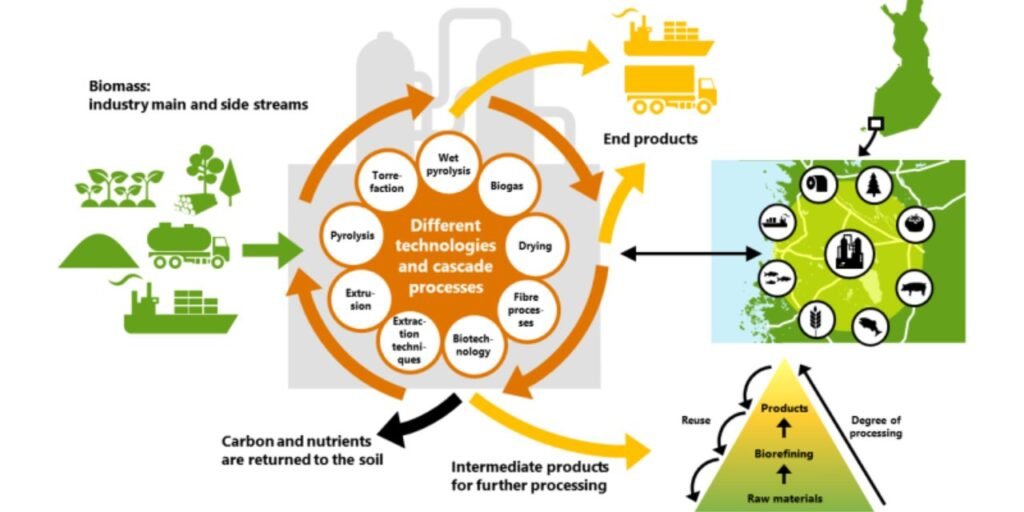
Hürth, 20 February 2025: The BioReCer Project (Biological Resources Certifications Schemes), funded by the EU, has entered its final phase. The project aims to enhance certification schemes for bio-based products by including new criteria for sustainability, origin, and traceability of biological resources. Active participation from stakeholders in the EU bioeconomy is crucial to ensure the success of this initiative.
With increasing concerns about climate change and environmental degradation, the transition to a bio-based economy is vital. BioReCer focuses on promoting the use of biological waste—such as food waste, municipal waste, and by-products from forestry, agriculture, and fishery—as renewable resources to replace fossil-based materials. However, the lack of proper certification for these resources hinders their industrial use.
Key Achievements of BioReCer:
- Material Flow Analysis: Assessed value chains in four sectors: fishery, forestry, agriculture, and municipalities to identify challenges and optimize resource use.
- BioReCer ICT Tool (BIT): A digital platform to improve traceability and environmental performance of bio-based products. BIT also helps companies assess their compliance with sustainability standards.
- Standardisation Toolkit: Provides a selection of 149 national and international standards and 26 certification schemes to support bioeconomy projects.
- Policy Recommendations: Includes seven key recommendations for policymakers to enhance the use of organic residues in bio-based products.
Importance of Stakeholder Participation:
The BioResources Stakeholders Platform (BRSP) has been set up to gather feedback and insights from bioeconomy stakeholders, certification bodies, and policymakers. Stakeholder input will play a vital role in refining certification schemes and ensuring their broad acceptance. Interested parties are encouraged to join BRSP and contribute to the development of these standards.