
Feed packaging is a simple but important part of animal care. It keeps feed fresh, clean, and ready to use. Good packaging promotes easy storage, protects the feed against moisture and pests, and allows farmers to move it around easily. With proper packaging, feed remains safe, and the animals get quality food every day.
What is Feed Packaging?
Packaging of feeds is a process of packing, sealing, and storing feeds in a way that retains freshness and safety. It offers protection to the feeds against moisture, dust, and pests. It facilitates easy movement, stacking, and storage on farms and in stores.
Purpose of Feed Packaging
The primary purpose of packaging is to protect feeds. It keeps the feed clean and dry, along with helping to maintain the nutrients within the product. Good packaging inhibits spoilage, keeping the feed safe for the animals.
Another purpose is to make storage and transport easier. Strong bags and containers reduce waste. They also allow feed to be stacked and moved without damage.
What is Pushing Demand for Feed Packaging?
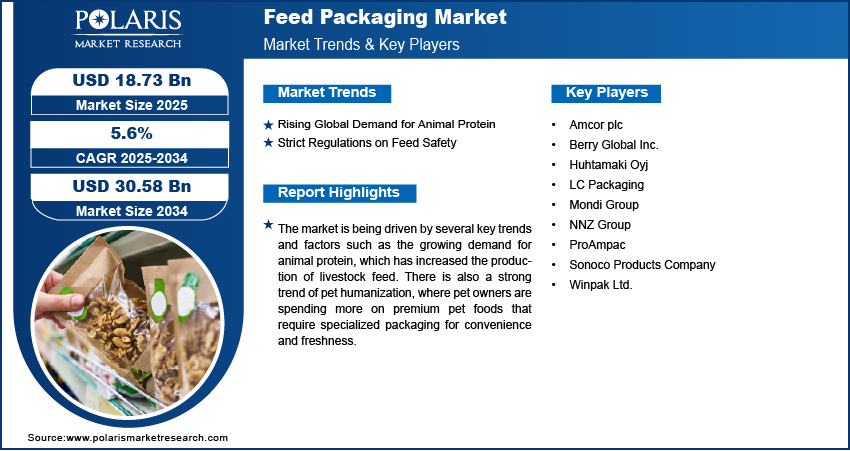
According to Polaris Market Research, the global feed packaging market size was valued at USD 17.78 billion in 2024 and is expected to register a CAGR of 5.6% from 2025 to 2034. Here are some of the major drivers:
- There is a greater demand for animal protein. More people consume meat, dairy products, and eggs, increasing the use of commercial feed by farms. Thus, this necessitates safe and robust packaging.
- Food safety rules are stricter. Feed must stay clean and fresh. This pushes the use of better and tamper-proof packaging.
- Humanisation of pets is on the rise. More pet owners purchase premium pet food in small and resealable packaging. This raises the demand for flexible bags and pouches.
Types of Feed Packaging
Feed packaging is very varied. Each type of feed packaging is selected according to the kind of feed and the conditions under which it is going to be kept.
- Plastic Bags: These are common for many kinds of animal feed. They are light, easy to carry, and can keep out moisture. They are often used for small bags of feed.
- Woven Polypropylene Bags: These bags can bear the impacts of substantial weights and are deployed for heavy loads of feed. They are tough, reusable, and protect the feed from tearing or spilling.
- Paper Bags: Paper bags can handle dry feeds. They are straightforward, cheap, and can be recycled. They are normally manufactured in limited or medium sizes.
- Bulk Containers: Large farms and feed mills use bulk bags or silos. They have a high volume of feed. They make loading and unloading easy using machinery.
Key Features of Feed Packaging
Packaging of feed plays an important role in keeping animal feed safe and ready for use. Good packaging protects feed, makes storage easy, and helps farmers handle it without trouble. Below are the features that matter most:
View More information @ https://www.polarismarketresearch.com/industry-analysis/feed-packaging-market/request-for-sample
- Strength and Durability: Packages of feed must be resilient enough to bear heavy loads. They should not tear or break during the process of lifting, stacking, or transporting. Durable bags reduce waste and keep the feed safe from damage.
- Protection from Moisture: Feed may spoil in a very short time due to moisture. Good packaging blocks water and humidity, keeping the feed dry. This helps the feed maintain its freshness, cleanliness, and safety for animals.
- Safe Packaging Material: The used material should be safe for animal feed. It must not alter the taste, smell, or quality of the product. Safe materials help in protecting the nutrients inside the feed.
- Handling in Ease: Packaging should be easy to lift, carry, and place in storage. Bags with handles, proper shape, or the right size help workers move feed with less effort. This makes daily work faster and safer.
- Clearly Label: Labels should be easy to read, showing the type of feed, ingredients, weight, and basic use instructions. Clear labels help farmers choose the right feed without confusion.
Final Thoughts
Packaging of feed maintains the feed as safe, fresh, and easy to use. Strong and moisture-resistant packaging with good labelling helps the feeds avoid damage, pests, and spoilage. Besides, it simplifies the processes of storage, handling, and transportation for the farmers. Proper packaging ensures feed quality, leading to healthy animals and productivity on farms.
Read More @ www.polarismarketresearch.com