Automotive Textiles (Mobiltech) have emerged as a critical segment in modern automotive and transportation systems, delivering enhanced functionality, safety, and performance. As a highly specialized and rapidly evolving domain within technical textiles, Mobiltech supports a wide range of applications across passenger vehicles, commercial vehicles, public transportation, railways, and aerospace sectors. By enabling superior structural reinforcement, acoustic insulation, thermal regulation, flame retardancy, and durability, automotive textiles play a vital role in improving passenger comfort, enhancing fuel efficiency through vehicle lightweighting, and ensuring occupant safety during critical situations. As a key driver of innovation in automotive engineering and interior design, the Mobiltech segment is redefining standards in vehicle safety, cabin acoustics, and environmental sustainability.
With continuous advancements in material science, circular recycling technologies, and the integration of smart textiles, this sector is shaping the future of mobility and sustainable transportation practices. Today, the industry offers a diverse portfolio of advanced products, including airbags, seatbelts, seat upholstery fabrics, tyre cord fabrics, headliners, automotive carpets, insulation felts, and other functional components used across both critical safety systems and aesthetic automotive applications.
The Automotive Textiles (Mobiltech) market in India was valued at INR 13,595 crores in 2021 and is projected to reach INR 20,165 crores by FY 2025-26, reflecting a robust compound annual growth rate (CAGR) of 10.35%. India’s Automotive Textile exports were valued at INR 2,704 crores in FY 2025-26, accounting for approximately 10.3% of total Technical Textile exports. Meanwhile, imports stood at INR 6,004 crores, representing around 25.96% of total Technical Textile imports. These figures highlight a critical phase for India’s Mobiltech sector. While domestic consumption is expanding rapidly alongside the country’s growing automotive industry, the high volume of imports indicates continued dependence on foreign high-performance materials. This trade imbalance underscores the urgent need for import substitution and presents significant opportunities for strengthening domestic manufacturing capabilities.
In this edition, we take a closer look at the diverse product segments shaping the Mobiltech sector, exploring breakthrough innovations, evolving automotive requirements, and emerging market dynamics. We examine how Automotive Textiles are advancing to meet stringent safety, emission, and regulatory standards while addressing industry challenges and unlocking new growth opportunities in both domestic and global markets.
To gain deeper insights into current market trends, growth opportunities, technological advancements, investment potential, and challenges in the Automotive Textiles sector, we interviewed some of the leading manufacturers in the field – Tesca Textiles & Seat Components (India) Pvt. Ltd. and SRF Limited.
Their valuable perspectives provide a comprehensive view of the industry’s evolving landscape and aim to inspire stakeholders and entrepreneurs to explore and invest in the growing Automotive Textile domain.
A. Seat Upholstery Fabrics
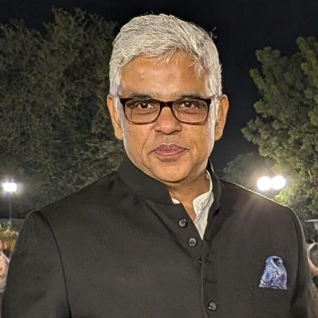
Shri. Pradeep Chhajerh
Chief Operating Officer,
Tesca Textiles & Seat Components (India) Pvt. Ltd.
1. What is the current market size and estimated CAGR of Seat Upholstery Fabrics in India and globally, and is there a demand-supply gap in India? If yes, how much is imported?
Automotive upholstery, as a category, comprises textile fabrics as well as synthetic and natural leather, although the use of natural leather is witnessing a sharp decline. Based on industry estimates, the market size is approximately ₹1,300 crore, of which around 55–60% is accounted for by textile materials. The CAGR of this segment is closely linked to the growth of automobile production in the country. While growth rates may fluctuate in the short term, as observed in recent years, the industry is expected to maintain a long-term CAGR of around 8%, with minor variations. In addition to a well-established base of Indian suppliers, nearly all major global manufacturers of automotive textiles are present in India, either independently or through joint ventures and collaboration agreements. We do not foresee any significant capacity constraints, and therefore, OEMs are generally not dependent on imported textiles. However, the situation may differ slightly in the artificial leather segment, particularly for PU-based products, where import dependency could be relatively higher.
2. What are the primary raw materials used in manufacturing Seat Upholstery Fabrics in India? Are they produced in India, or are many of them imported & at what cost?
The primary materials consumed in automotive upholstery include polyester yarns used for both face and backing fabrics, along with PU foam. These materials are largely produced locally by well-established and capable suppliers in India. While certain chemicals used in PU foam production are partially imported, a robust and well-developed domestic supply chain is also in place to support industry requirements.
3. What are the recent innovative trends in this product segment, and are any of these niche or innovative products being exported?
There has been an increasing focus on making automotive textiles more environmentally friendly and circular. While viable solutions are available, large-scale adoption will require further development of the ecosystem. Additionally, costs need to either reduce over time or be absorbed at the system level to enable wider implementation. As expected, Europe is currently ahead in the development and adoption of such sustainable solutions. On the design front, significant emphasis is being placed on enhancing the aesthetics of automotive interiors. This has led to the increased use of ornamentation and customization in textiles, including embossing, various types of patches, diverse top-stitching techniques, and several other design elements. While these innovations improve visual appeal and consumer experience, they also add considerable complexity to product development and manufacturing processes.
4. Are all required IS standards available in this product segment? If not, please mention the Standards that you want BIS to develop.
The automotive industry is a well-researched and well-established sector, both in terms of manufacturing processes and quality standards. All OEMs follow their own engineering standards, developed over decades of experience and continuous improvement. As a mature and customer-centric industry, it provides substantial protection to end consumers through both explicit standards and implicit performance assurances. Considering the robustness of the existing systems and standards, we do not believe that the Bureau of Indian Standards needs to undertake any additional work in this direction.
5. Are all critical testing facilities available in Indian Labs?
The testing ecosystem has evolved significantly over the past 20–25 years. Today, virtually all tests required by customers are available through multiple well-equipped laboratories, ensuring adequate testing capacity and reliable support for the industry.
B. Tyre Cord Fabric

Shri. Ajay Kumar Chaube
Senior Vice President & Head-Operations,
SRF Limited
1. What is the current market size and estimated CAGR of Tyre Cord Fabric in India and globally, and is there a demand-supply gap in India? If yes, how much is imported?
The global Tyre Cord Fabric (TCF) market is estimated at approximately 1,500 kTPA and is growing at a CAGR of around 2%. The Indian TCF market is currently estimated at approximately 180 kTPA, comprising Nylon 6, Nylon 66, and Polyester TCF, based on their respective applications in tyres. Demand for Nylon 6 TCF in India has remained largely stagnant due to the increasing shift toward radialisation. In contrast, Nylon 66 TCF and Polyester TCF have demonstrated stronger growth, with CAGR in the range of 5-7%, resulting in an overall TCF demand growth of approximately 3%. The Indian TCF market is currently well balanced, with no significant demand-supply gap. However, imports continue to account for a notable share, representing nearly one-third of total domestic demand. A substantial portion of these imports originates from China and FTA-advantaged ASEAN countries.
2. What are the primary raw materials used in manufacturing Tyre Cord Fabric in India? Are they produced in India, or are many of them imported & at what cost?
The primary raw material for Nylon 6 Tyre Cord Fabric is Caprolactam. India currently has only one domestic producer of Caprolactam, while the remaining requirement is largely met through imports. For Polyester Tyre Cord Fabric, the key raw material is PET chips, which are predominantly produced within India.
3. What are the recent innovative trends in this product segment, and are any of these niche or innovative products being exported?
As Tyre Cord Fabric directly serves the tyre industry, product advancements are primarily driven by the need for enhanced tyre performance, evolving tyre designs, growing demand for high-performance materials, and an increasing focus on sustainable and environmentally friendly solutions. While the Indian tyre industry is rapidly adapting to these evolving requirements, several overseas tyre manufacturers are more advanced in adopting next-generation technologies and continue to seek reliable suppliers globally.
4. Are all required IS standards available in this product segment? If not, please mention the Standards that you want BIS to develop.
BIS standards for all categories of Tyre Cord Fabric products have been formulated and notified in recent years, ensuring standardization and quality compliance across the sector.
5. Are all critical testing facilities available in Indian Labs?
Yes, all critical testing facilities required for the industry are available in India.