Cotton made in Africa® (CmiA) and CmiA Organic have further strengthened their position as globally trusted sustainability standards after independent verification results for 2025 confirmed outstanding compliance across cotton-producing regions in Sub-Saharan Africa. The findings, published in the 2025 Aggregated Verification & Implementation Report, highlight consistently high performance in management, environmental stewardship, farmer welfare, and economic development.
During 2025, independent verification bodies conducted 24 verification missions involving 20 cotton companies across 10 African cotton-producing countries. The assessments included 12 field-level and 12 ginnery-level verifications, evaluating compliance with 12 sustainability principles and 288 performance indicators under the CmiA and CmiA Organic standards.
The report revealed that participating companies achieved “very good” ratings across all four sustainability pillars—Management, People, Planet, and Prosperity. The strongest performance was recorded under the Prosperity pillar, closely followed by Management, while People and Planet also received consistently high evaluations.
According to Ruth Achterwinter, Verification Manager at the Aid by Trade Foundation (AbTF), the results demonstrate the effectiveness of long-term collaboration with cotton partners.
“These results confirm our approach of supporting partners through continuous cooperation, targeted capacity building, and on-the-ground engagement. Independent verification ensures transparency while enabling us to provide focused support wherever improvements are needed,” she said.
Training Drives Continuous Improvement
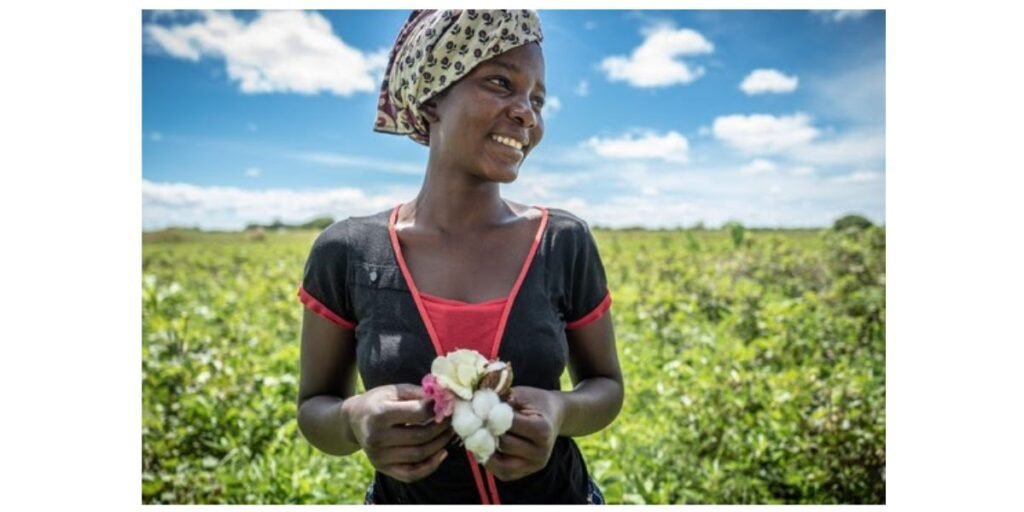
Beyond verification, farmer education remained central to strengthening sustainable cotton production. Throughout 2025, nearly 715,000 Cotton made in Africa farmers, including almost 43,000 CmiA Organic producers, participated in training programmes designed to improve agricultural practices and livelihoods.
Training covered a wide range of subjects, including:
- Climate-resilient cotton cultivation
- Soil health and fertility management
- Sustainable farming techniques
- Women’s empowerment
- Good agricultural practices
These initiatives aim to improve productivity while helping farmers adapt to climate-related challenges and enhance long-term sustainability.
Collaboration Strengthens the Cotton Value Chain
The report also highlights the importance of continuous engagement between the Aid by Trade Foundation and its partners. Initiatives such as the Innovations Club, regional workshops, and collaboration with international cotton stakeholders continue to promote knowledge sharing, innovation, and best practices throughout the cotton value chain.
As global brands increasingly seek transparent and responsibly sourced raw materials, the strong verification results further reinforce the credibility of Cotton made in Africa and CmiA Organic as leading sustainability standards supporting African cotton farmers while delivering traceable, responsibly produced cotton to international markets.