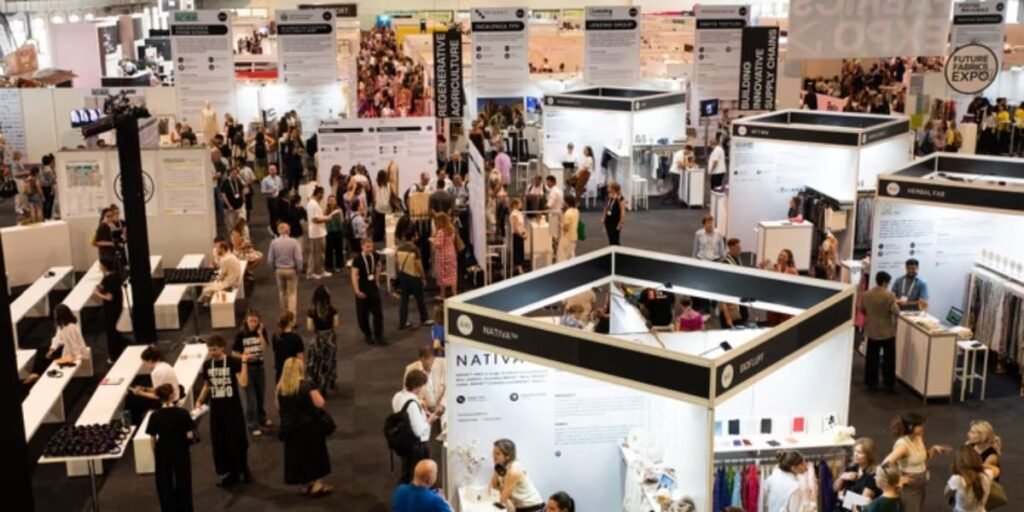
Future Fabrics Expo (FFE) 2026, the world’s largest exhibition dedicated exclusively to sustainable material sourcing, reinforced its position as a global catalyst for responsible textile innovation by bringing together cutting-edge material solutions, industry leaders, researchers, and sustainability experts under one roof.
Held across 3,300 square metres in Brussels, this year’s expo ran alongside the Textiles Recycling Expo, expanding its reach and accelerating industry collaboration to support a low-carbon, circular, and nature-positive textile economy.
Since its launch in 2011, Future Fabrics Expo has championed the transition away from fossil fuel-based materials by showcasing certified, best-practice, and next-generation fibres for the fashion, footwear, interiors, home textiles, and lifestyle industries.
Curated Exhibits Address Textile Industry’s Biggest Challenges
FFE 2026 featured a series of specially curated zones focusing on the industry’s most urgent sustainability issues, highlighting commercially viable innovations already transforming global supply chains.
Tackling Microfibre Pollution and Toxic Chemicals
One of the most talked-about sections, “The Invisible Threat – Microfibres and Chemical Pollution,” examined the environmental impact of synthetic microfibre shedding and hazardous chemical finishes.
Featured innovations included:
- WTRLSS™ waterless digital dyeing technology reducing water use by over 99%
- Beyond Surface Technologies’ bio-based textile finishes made from algae, plant oils and natural waxes
- Södra’s Liquid Forest® Tannin, offering a chrome-free leather tanning alternative
These solutions aim to eliminate persistent pollutants while reducing dependence on petroleum-derived chemicals.
Circularity Takes Centre Stage
The “Learning from Nature – Biodegradation and Textile Circularity” showcase focused on designing products that naturally return to biological cycles.
Among the highlights were:
- CIRCULOSE®, regenerated fibres produced entirely from post-consumer cotton textiles
- RCO100™, mechanically recycled cotton yarns without chemicals
- OnceMore®, blending recycled cotton cellulose with wood pulp
- LENZING™ ECOVERO™ x REFIBRA™, combining certified wood fibres with recycled textile content
These innovations demonstrate scalable alternatives to virgin fibre production while supporting textile-to-textile recycling.
Biosynthetics Shape the Future of Fibres
For the first time, Future Fabrics Expo dedicated an entire exhibition area to biosynthetic materials.
The showcase explored renewable alternatives to petroleum-based synthetic fibres through innovations such as:
- Hyosung TNC’s regenBIO, a sugarcane-based elastane
- AMSilk’s biotechnology-produced spider silk proteins created through precision fermentation
The emerging category highlights how renewable carbon sources and biotechnology can reshape future textile manufacturing.
Innovation Hub Supports Commercialisation
FFE’s Innovation Hub featured startups developing next-generation textile technologies, with a strong emphasis on:
- Natural and bacterial dye technologies
- Circular manufacturing systems
- Algae-based raw materials
- Sustainable embellishment solutions
- Advanced bio-based fibres
The platform helps connect innovators with brands and manufacturers ready to scale commercial adoption.
Sustainable Footwear and Interiors
The Footwear Hub demonstrated solutions for reducing waste in footwear production, including:
- Bacterial cellulose shoe uppers
- Bananatex knit sneakers made from regenerative banana fibres
- Bio-based rubber alternatives
- Mycelium materials
- Fossil-free outsole technologies
Meanwhile, the Homes, Interiors & Lifestyle section showcased sustainable furniture, home textiles, lighting, mycelium-based materials, natural dyes, and responsibly sourced alpaca fibres.
Regenerative Agriculture Gains Momentum
Recognising agriculture as the foundation of sustainable textiles, the Regenerative Agriculture Area highlighted initiatives restoring biodiversity, improving soil health, and supporting farming communities.
Featured organisations included:
- NATIVA™
- Papillon Bleu
- Remei
- Nobody’s Child, showcasing regenerative cotton programmes with Indian smallholder farmers
Industry Collaboration Key to Scaling Innovation
The Supply Chain Installation demonstrated how collaboration across fibre producers, processors, manufacturers, and brands can accelerate commercial adoption of innovative materials.
Industry leaders including Canopy and TextileGenesis emphasised that scaling next-generation fibres requires stronger partnerships, robust traceability, and coordinated industry investment.
Alongside the exhibition, Future Fabrics Expo hosted expert sessions covering textile traceability, investment opportunities for sustainable startups, circular material innovations, and scaling next-generation man-made cellulosic fibres.
As sustainability regulations tighten and brands seek lower-impact alternatives, Future Fabrics Expo 2026 showcased how innovation, collaboration, and material science are driving the textile industry’s transition toward a circular and climate-positive future.