
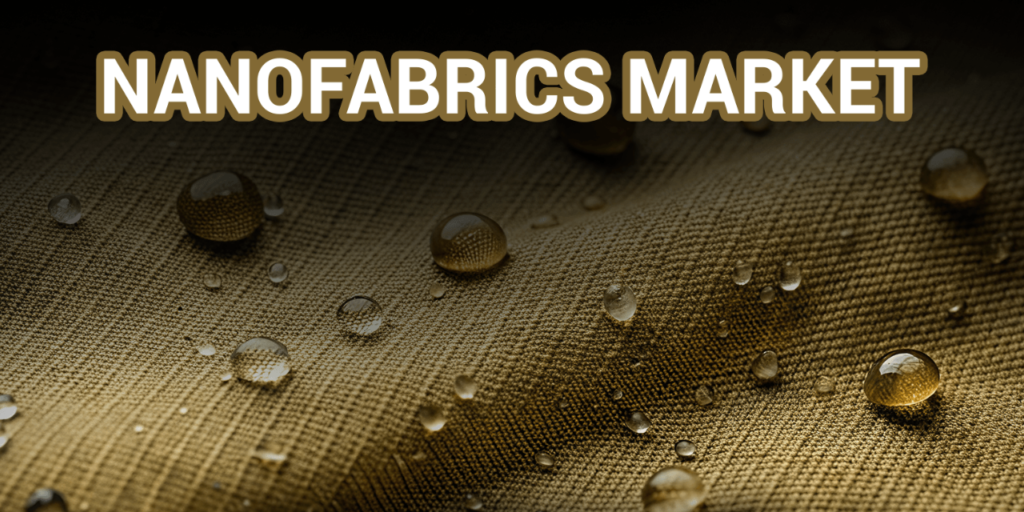
The global nanofabrics market is poised for significant expansion over the next decade, driven by increasing demand for smart textiles, advanced medical applications and high-performance protective clothing. According to market estimates, the industry is expected to grow from USD 12.09 billion in 2026 to USD 63.62 billion by 2034, registering a robust compound annual growth rate (CAGR) of 23.1%.
The rapid evolution of nanotechnology and advanced textile manufacturing is reshaping the industry, enabling fabrics with enhanced functionality such as antibacterial protection, electrical conductivity, UV resistance, water repellency and superior durability.
Research Innovations Accelerate Industry Growth
Research institutions worldwide are accelerating innovation in nanofabric production through next-generation manufacturing technologies. One notable development came in January 2026, when researchers from the Max Planck Institute for Intelligent Systems (MPI-IS) and the National University of Singapore (NUS) introduced a light-driven 3D printing technology capable of producing advanced nanofabric structures.
The breakthrough extends beyond conventional polymer manufacturing and opens opportunities for developing multi-material structures used in robotics, semiconductors and medical devices.
Expanding Applications Across Industries
Nanofabrics are manufactured by integrating advanced nanomaterials including nanofibers, nanoparticles and carbon nanotubes into textile structures.
Their unique properties have expanded their use across several industries:
- Medical Textiles: wound dressings, biosensors and healthcare products
- Protective Clothing: antimicrobial apparel, military uniforms and industrial safety wear
- Outdoor Performance Apparel: waterproof and breathable garments
- Smart Textiles: conductive fabrics for wearable electronics
- Industrial Applications: filtration systems and advanced composite materials
Growing regulatory emphasis on safer, functional and sustainable textiles is further supporting adoption across these sectors.
Leading Companies Driving Innovation
Industry leaders continue investing in advanced manufacturing technologies, sustainable materials and strategic collaborations to strengthen their market positions.
Major companies shaping the global nanofabrics industry include:
- DuPont
- Nanotex
- E-Spin NanoTech Pvt. Ltd.
- BASF
- Toray Industries
- Teijin Limited
- Hengli Group
- Oripol
- Lenzing AG
Recent innovations include Toray’s NANODESIGN® molecular fibre technology, Teijin’s recycled polyester Nanofront® nanofibre, and Lenzing’s acquisition of TreeToTextile AB to strengthen its specialty fibre portfolio.
Sustainability and Smart Manufacturing Gain Momentum
Manufacturers are increasingly focusing on cleaner production methods, bio-based materials, recycled fibres and energy-efficient manufacturing processes. Strategic partnerships, acquisitions and research collaborations are accelerating commercialization of next-generation nanofabrics for both consumer and industrial markets.
The growing adoption of smart manufacturing and precision fibre engineering is expected to further improve product performance while reducing environmental impact.
Outlook
The rising demand for protective clothing in healthcare, defence, chemical processing and industrial safety is expected to remain one of the strongest growth drivers for the nanofabrics industry.
Combined with advancements in wearable electronics, medical textiles and sustainable fibre technologies, nanofabrics are expected to play a central role in the future of technical textiles and advanced material engineering.