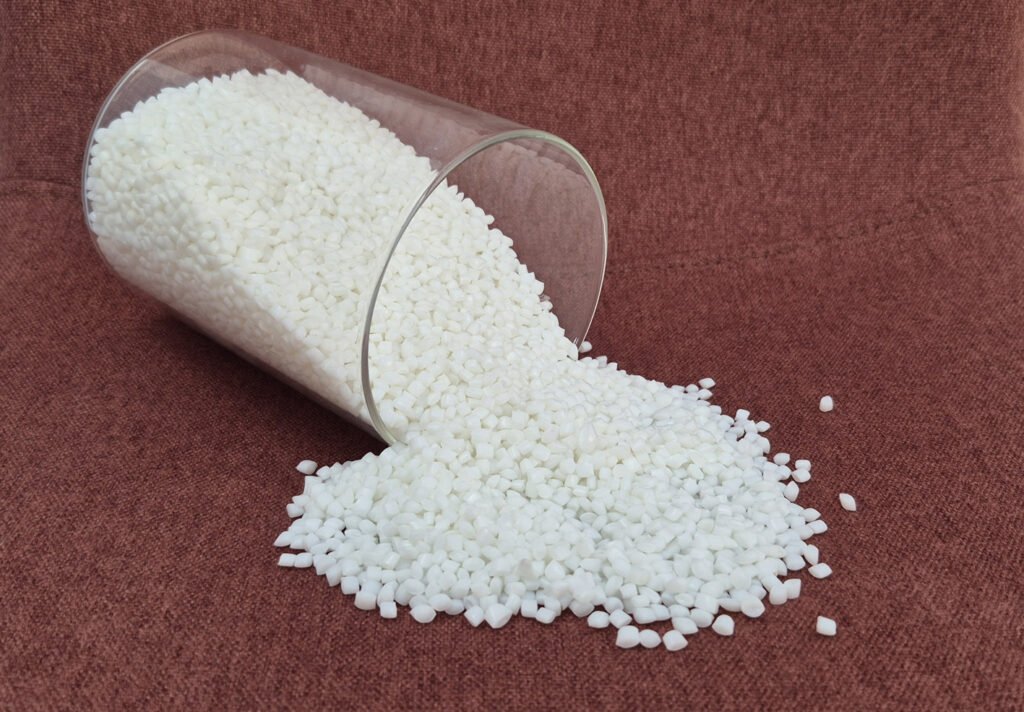
French deeptech company REC has reached a major milestone in textile sustainability by launching production of recycled polyamide (rPA) pellets derived from discarded tights, stockings, lingerie and other textile waste. The development marks an important step toward establishing a circular nylon value chain in Europe and addressing one of the textile industry’s most challenging recycling problems.
The company recently opened its operational laboratory in Joigny, France, enabling the transition from experimental research to the production of several dozen kilograms of recycled polyamide pellets every month. The facility represents a critical phase in REC’s industrial scale-up strategy and serves as a foundation for the future development of a full-scale manufacturing plant.
Founded in Auxerre in 2019 under the name Écollant before rebranding as REC in 2025, the company has developed an innovative closed-loop physico-chemical recycling process capable of treating blended polyamide-elastane yarns. These blended materials are widely used in tights, hosiery, lingerie and technical textiles but have historically been difficult to recycle due to the different chemical and thermal properties of nylon and elastane fibres.
Traditional mechanical recycling methods often struggle to separate the two materials effectively, resulting in degraded quality and limited reuse opportunities. REC’s proprietary technology overcomes these limitations by recovering high-quality recycled polyamide that can be reintegrated into industrial manufacturing processes.
The breakthrough comes at a time when demand for sustainable alternatives to virgin synthetic fibres is increasing. Polyamide, commonly known as nylon, is the world’s second most widely used synthetic fibre, with global production reaching approximately 8.7 million tonnes in 2024. The material is extensively used across apparel, sportswear, automotive, electronics and packaging industries.
Beyond recycling technology, REC is pursuing a broader vision of creating a fully integrated European recycled nylon supply chain. The company is developing a collection network that will source both pre-consumer and post-consumer textile waste from manufacturers, brands, retailers and consumers across Europe.
By processing textile waste locally, REC aims to improve raw material traceability, strengthen supply security and reduce dependence on imported virgin petrochemical resources. The initiative is expected to contribute significantly to Europe’s sustainability goals while supporting the growth of a circular textile economy.
According to REC founder and president Laurent Trognon, the company’s mission extends beyond recycling nylon. It seeks to transform complex textile waste into valuable industrial raw materials that can serve not only the fashion sector but also a wide range of manufacturing industries.
Industry experts believe innovations such as REC’s recycling technology could play a crucial role in reducing textile waste and giving a second life to thousands of tonnes of tights, stockings and technical textiles that currently end up in landfills or incineration facilities each year.