
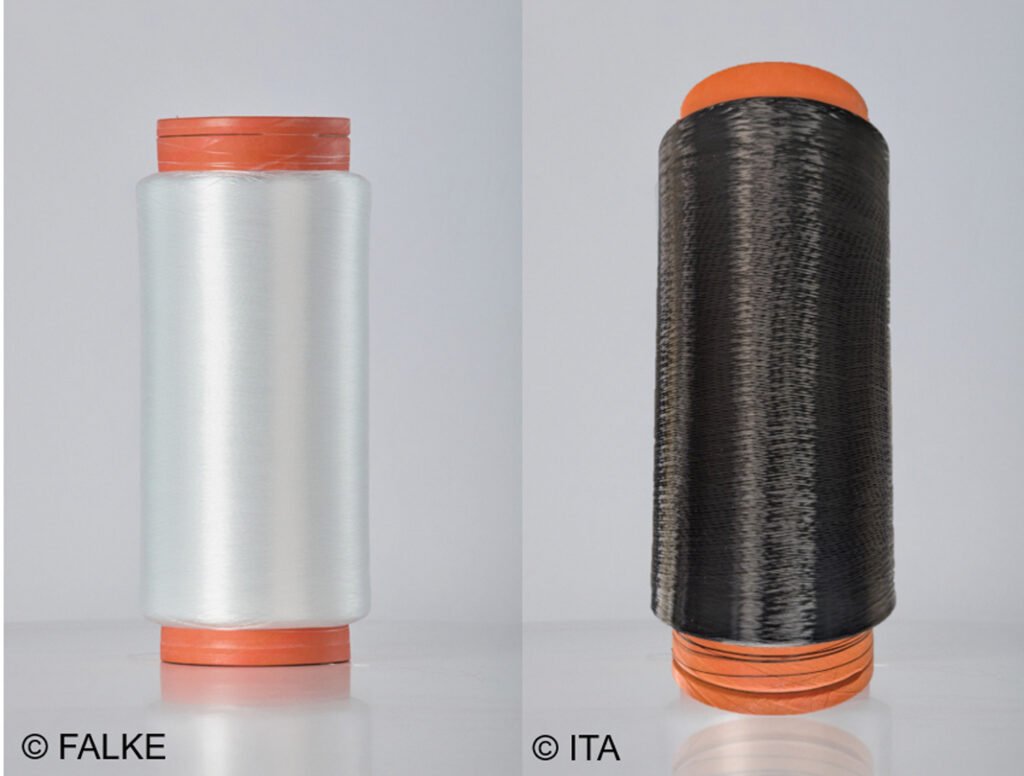
A German research consortium is working to unlock the textile potential of bio-based polyethylene (PE) through the bioPEtex project, an initiative focused on developing industry-ready fibres for apparel and technical textile applications. The project aims to overcome the long-standing processing limitations of PE and position it as a recyclable, lightweight and bio-based alternative for the textile sector.
The project brings together several specialised partners across the textile value chain. TECNARO GmbH, based in Ilsfeld, Germany, is developing spinnable bio-based PE compounds that include bio-based colour pigments. Meanwhile, the Institute for Textile Technology at RWTH Aachen University and BB Engineering (BBE) are working on industrial-scale melt spinning and false-twist texturing processes to make the material suitable for textile manufacturing. German hosiery and sportswear brand FALKE has already begun initial knitting trials using the newly developed yarns.
A notable milestone in the project has been the successful production of a white T-shirt made from bio-based polyethylene yarn, marking an early proof of concept for the material’s commercial viability in textile applications.
Tackling PE’s textile limitations
Polyethylene is one of the most widely produced polymers in the world and is valued for its durability, low weight, chemical stability and hydrophobic properties. However, it has rarely been used in mainstream textile fibre production because of technical limitations. PE crystallises at low temperatures, leaving only a narrow temperature window for spinning and texturing, and it is also difficult to dye using conventional methods.
These challenges have historically confined PE’s textile use to niche segments such as composites, geotextiles and ultra-high molecular weight polyethylene (UHMWPE) fibres. Through bioPEtex, researchers are attempting to adapt PE so it can be processed on industrial textile equipment and used in broader categories such as sportswear, outdoor products and technical textiles.
According to Ralf Morgenroth, Head of Engineering Texturizing at BB Engineering, the company’s expertise in fibre production systems and process engineering is helping to push the material beyond its conventional applications. The project’s goal is not just to produce a bio-based fibre, but to make it compatible with existing textile processes and commercial requirements.
Focus on recyclability and lower-impact materials
One of the project’s most significant advantages lies in the sustainability profile of bio-based PE. Unlike fossil-based PE, bio-based polyethylene is produced from renewable feedstocks such as sugar cane or corn-derived starch, although the resulting polymer remains chemically identical to conventional PE. This means it can potentially integrate into existing industrial systems while offering a lower fossil carbon footprint.
The project also places a strong emphasis on end-of-life recyclability, aligning with the textile industry’s growing push toward circular material systems. Since PE has a relatively low melting point, it may also require less energy during processing compared to some conventional textile polymers, potentially lowering manufacturing costs and energy use.
Klaus Schäfer, Managing Director of BB Engineering, said the project’s results so far indicate that polyethylene could offer “significant economic and ecological advantages” in specific textile applications. If successfully commercialised, bio-based PE fibres could open new opportunities for manufacturers looking for lightweight, hydrophobic and recyclable textile materials.
Potential impact on future textile markets
The development of textile-grade bio-based PE comes at a time when the industry is actively searching for alternatives to fossil-based fibres and materials with stronger circularity potential. If bioPEtex succeeds in making PE compatible with apparel and home textile applications, it could create new product categories and give textile producers access to a material already widely available through global plastics and packaging supply chains.
The project also reflects a broader trend in textile innovation: adapting established industrial polymers for more sustainable and specialised end uses. With successful knitting trials underway and a first garment already produced, bioPEtex could become an important case study in how bio-based materials, fibre engineering and textile recycling goals can converge in practical manufacturing.