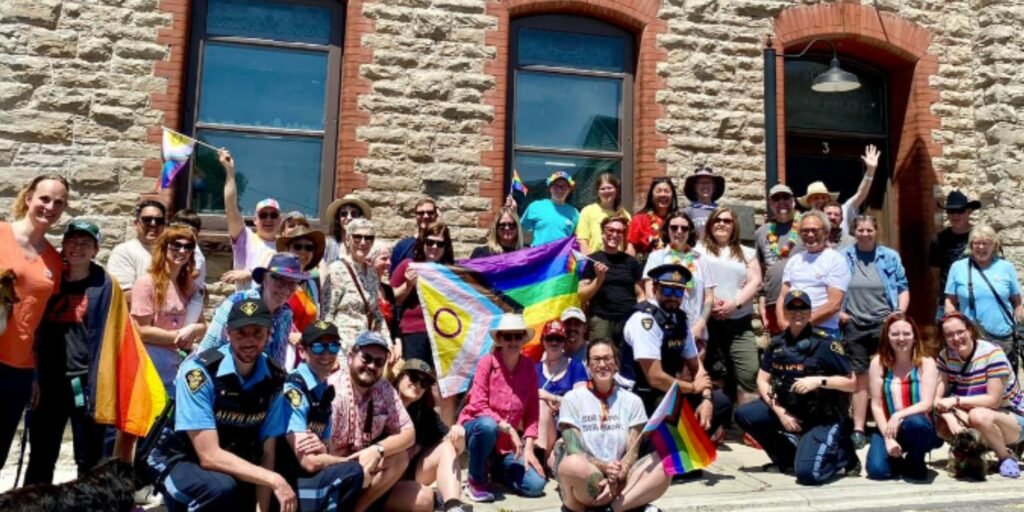
Mississippi Valley, Canada: The Mississippi Valley Textile Museum (MVTM) has launched a powerful new virtual exhibition that explores the intersection of fashion, identity, and self-expression within the local 2SLGBTQIA+ community. Titled “Fashioning Identity: Clothing and the 2SLGBTQIA+ Community of the Mississippi Valley,”the bilingual online exhibition officially debuted on June 7, 2026, as part of the Digital Museums Canada Community Stories collection.
The exhibition presents a unique and deeply personal exploration of how clothing shapes identity, belonging, confidence, and self-discovery. Through photographs, interview excerpts, personal reflections, and multimedia storytelling, the project highlights the experiences of nine members of the Mississippi Valley 2SLGBTQIA+ community and their evolving relationships with fashion.
Developed over two years by and for the queer community, the exhibition seeks to preserve and celebrate stories that have historically been underrepresented in mainstream narratives. The project emphasizes the role of clothing not only as a practical necessity but also as a powerful tool for expression, solidarity, visibility, and resistance.
“This online exhibition empowers people to tell their stories in their own voices and preserve queer culture—a culture that has often been marginalized throughout history,” the museum said in a statement.
The idea for the project originated in 2022 when Outreach, Engagement, and Development Coordinator Laila Hackwas an intern at the museum. Inspired by the museum’s commitment to inclusion and its status as Canada’s first Rainbow Registered museum, Hack envisioned an exhibition that would weave together community, textiles, identity, and authentic storytelling.
“As a queer person myself, it felt like a natural opportunity to connect these themes and create a platform where people could share their experiences on their own terms,” Hack explained.
Rather than seeking a specific type of participant, the museum invited members of the local community to contribute openly. The result is a diverse collection of voices, perspectives, and personal journeys that illustrate how clothing can evolve alongside confidence, self-awareness, and identity.
One of the featured participants, Nils Hamster, described the experience as an opportunity to reflect on the significance of fashion in shaping identity.
“It was an honour to participate in this project and share my personal journey of self-expression through fashion,” Hamster said. “Clothing has played an important role in how I communicate who I am and how I connect with others.”
The exhibition also serves as an important historical record. According to Michael Rikley-Lancaster, Executive Director and Curator of the MVTM, documenting contemporary queer experiences helps preserve stories that are often absent from traditional archives.
“2SLGBTQIA+ people have always been part of our communities, even when they were not free to live openly as themselves,” he said. “Capturing these stories through clothing and lived experiences is both meaningful and necessary.”
Available in both English and French, the exhibition includes full interviews, photography, and multimedia content that encourage visitors to engage deeply with the participants’ stories. Museum officials hope the project will foster connection, understanding, and visibility while inspiring others to embrace their own journeys of self-expression.
Supported by Digital Museums Canada and managed by the Canadian Museum of History, the exhibition is now accessible online through the Mississippi Valley Textile Museum’s digital platforms.
As conversations around diversity, inclusion, and representation continue to grow, Fashioning Identity stands as a powerful reminder of the role fashion can play in shaping individual identities and preserving community histories for future generations.