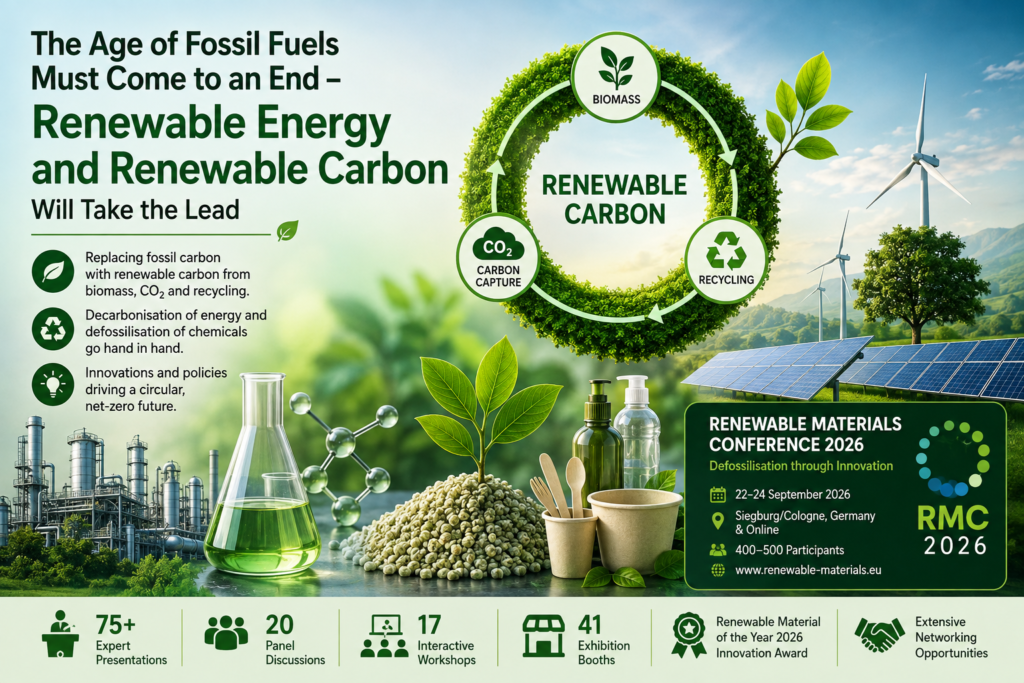
As industries worldwide accelerate their transition toward climate neutrality, renewable energy alone will not be enough to eliminate dependence on fossil resources. According to nova-Institute, the future of the chemical and plastics industries lies in renewable carbon, a concept that will play a pivotal role in replacing fossil-based carbon feedstocks and enabling a truly circular economy.
While renewable energy sources such as solar, wind, batteries, and green hydrogen are transforming the global energy landscape, industries that rely on carbon as a raw material—including chemicals, plastics, coatings, adhesives, and advanced materials—require a different pathway. This transition, known as defossilisation, involves replacing fossil carbon with renewable carbon derived from sustainable biomass, carbon dioxide (CO₂), and recycled materials.
According to nova-Institute, decarbonisation of the energy sector and defossilisation of the chemical industry are complementary strategies that must advance together to achieve global net-zero emissions targets. Renewable carbon technologies are already commercially available or under development, but broader adoption will require supportive policy frameworks that encourage innovation rather than continued dependence on fossil-based industries.
To accelerate this transformation, the Renewable Materials Conference (RMC) 2026 will be held from 22–24 September 2026 in Siegburg/Cologne, Germany, with online participation also available. Organised by nova-Institute, this year’s conference carries the theme “Defossilisation through Innovation” and will bring together stakeholders from the chemical and plastics industries, brand owners, policymakers, investors, researchers, and start-ups.
The conference will feature 75 expert presentations, 20 panel discussions, and a high-level opening panel focused on how multiple global disruptions are accelerating industrial transformation. Additionally, 17 interactive workshops will cover topics including renewable carbon technologies, circularity, certification, policy developments, lignin valorisation, market mechanisms, and biodegradable plastics for agriculture and forestry.
Participants will also have access to 41 exhibition booths showcasing innovations across renewable materials and sustainable technologies. A major highlight will be the “Renewable Material of the Year 2026” Innovation Award, sponsored by Covestro, where six finalists will present their breakthrough materials and technologies before delegates vote for the winner.
The event is expected to attract 400–500 participants from across the global renewable materials ecosystem. Extensive networking opportunities, professional matchmaking sessions, and evening events are designed to foster partnerships and accelerate commercialization of sustainable innovations.
Registration is currently open, with a 10% early-bird discount available until 16 August 2026.
The conference is supported by numerous international industry associations, research organisations, and sustainability initiatives, reflecting the growing global momentum behind renewable carbon and circular materials.
As governments and industries seek practical pathways to achieve climate goals, renewable carbon is emerging as a critical solution that complements renewable energy, paving the way for a resilient, fossil-free industrial future.