
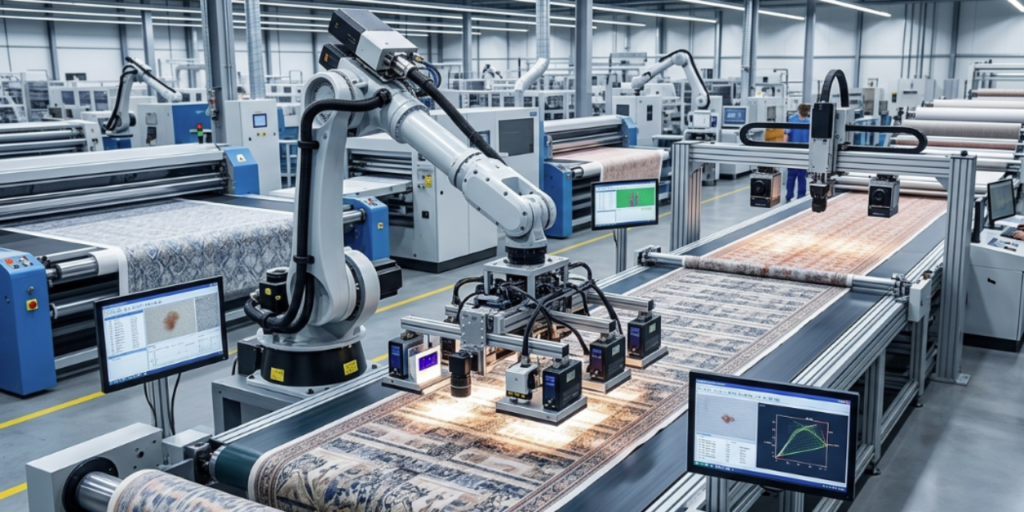
According to Growth Market Reports, the global market for robotic textile inspection systems was valued at USD 1.23 billion in 2024 and is set to witness significant growth in the coming years. With a projected compound annual growth rate (CAGR) of 9.7%, the market is expected to reach approximately USD 2.84 billion by 2033. This growth is largely driven by the increasing need for automation, enhanced quality control, and improved operational efficiency across textile manufacturing processes worldwide.
The textile industry is undergoing a transformative shift with the adoption of automation, artificial intelligence (AI), and advanced robotics. Robotic textile inspection systems have emerged as a key innovation, revolutionizing quality control by integrating robotics, machine vision, and intelligent analytics. These systems enable precise and consistent detection of fabric defects, making them essential for manufacturers aiming to maintain high quality standards while improving productivity.
Key Market Drivers
A major factor contributing to market growth is the rising focus on quality assurance. Textile manufacturers are required to comply with stringent international standards, and robotic inspection systems help ensure consistency by identifying even minor defects that may be missed through manual inspection.
Additionally, increasing labor costs and workforce shortages are accelerating the shift toward automation. Robotic systems provide a cost-efficient alternative by reducing reliance on manual labor while enhancing production throughput.
The growing demand for technical and industrial textiles in sectors such as automotive, healthcare, and construction is further boosting the adoption of advanced inspection solutions. These applications demand high precision, as defects can directly impact product safety and performance.
The implementation of Industry 4.0 technologies is also playing a significant role. The integration of robotics with IoT and cloud-based systems enables real-time monitoring, predictive maintenance, and seamless data exchange, improving overall manufacturing efficiency.
Technological Advancements
Artificial intelligence is significantly enhancing defect detection capabilities, allowing systems to identify complex irregularities such as pattern deviations and color inconsistencies with greater accuracy.
Cloud-based inspection platforms are enabling remote data storage and analysis, supporting improved decision-making and process optimization.
Emerging technologies such as digital twins are facilitating virtual simulation of inspection processes, enabling real-time adjustments and performance improvements.
Furthermore, advancements in robotics and sensor technologies, including 3D imaging and tactile feedback systems, are improving the inspection of complex and flexible textile materials.
Opportunities and Future Outlook
The market presents strong growth opportunities in emerging economies, where increasing industrialization and investment in textile manufacturing are driving demand.
There is also a growing need for flexible and customizable inspection systems that can adapt to diverse fabric types and production requirements.
Sustainability is another key factor, as robotic inspection systems help minimize material waste by detecting defects early in the production cycle, supporting environmentally responsible manufacturing practices.
Looking ahead, the integration of robotic inspection systems into fully automated smart factories is expected to shape the future of the industry, enabling end-to-end automation from production to quality control and packaging.
Competitive Landscape
The market is characterized by the presence of several prominent players, including Shelton Vision, Uster Technologies, Elbit Vision Systems (EVS), BarcoVision, Amsler Textech, Shenzhen Smartech Technology, Erhardt+Leimer, Qvision Systems, LaVision, Saurer AG, AUTEFA Solutions, and Menzel Vision & Robotics.